

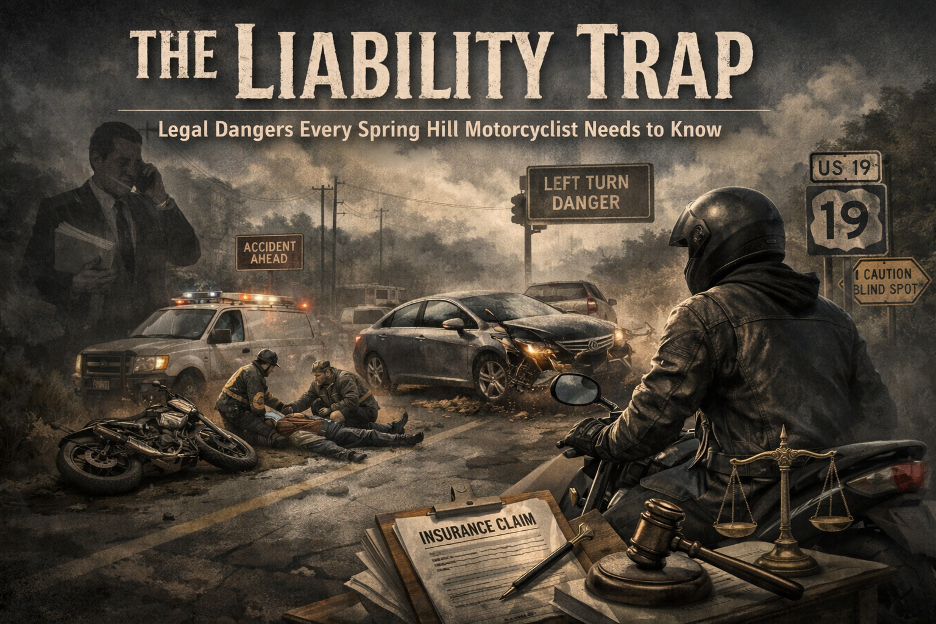
Motorcycling in Spring Hill offers freedom and exhilaration, but the risks riders face are far greater than those in cars. Every year, dozens of motorcyclists find themselves in legal battles that can be as painful as the crashes themselves. Understanding these pitfalls can mean the difference between a smooth recovery and a lifetime of complications.
Real Cases That Warn Us
Consider the left-turn collision on US Highway 19 last year, where a distracted driver failed to yield to a motorcyclist. The rider suffered severe fractures and a traumatic brain injury, while the driver’s insurance tried to minimize compensation. In another case, a lane-change crash on Mariner Boulevard led to a three-vehicle pileup. The motorcyclist, despite wearing a helmet, faced multiple fractures and road rash, and the legal fight dragged on for months because of unclear fault attribution, highlighting how a strong legal empire can influence the outcome of such complex cases.
These cases aren’t rare. According to Florida traffic reports, motorcycles account for only 3% of registered vehicles but 14% of traffic fatalities. The combination of high speeds, visibility issues, and unpredictable drivers creates a volatile environment for riders.
Legal Risks Every Rider Should Know
Motorcyclists face unique liability challenges in Florida. Comparative negligence can reduce your compensation if even partially at fault. PIP coverage is limited, and serious injury rules require permanent impairment before filing certain lawsuits. Even minor missteps after a crash—like giving recorded statements without guidance or failing to preserve accident evidence—can compromise claims.
Certain roads in Spring Hill are notorious for accidents. US Highway 19 and County Line Road see frequent collisions due to heavy traffic and poor lighting, while Commercial Way is rife with blind spots for delivery vehicles. Knowledge of these hotspots is crucial for both prevention and legal strategy.
Practical Steps for Riders
Street-smart riders know that surviving a crash involves more than just wearing protective gear. Here are actionable tips:
- Document Immediately: Take photos of the scene, injuries, skid marks, and vehicle positions.
- Medical Priority: Seek care even for minor injuries; delayed symptoms often appear days later.
- Witnesses Count: Collect statements from bystanders; their testimony can prove invaluable.
- Insurance Awareness: Report the accident, but avoid detailed admissions that can be used against you.
- Legal Consultation: Consult an attorney experienced in motorcycle cases before speaking to adjusters. A trusted resource in Spring Hill is Zervos & Calta, known for guiding accident victims through complex claims.
Why Insurance Companies Play Hardball
Adjusters aim to settle quickly and cheaply. Tactics include offering lowball amounts before injuries are fully known, challenging medical bills, and leveraging comparative negligence to shift blame. Understanding these maneuvers, along with the value of personal injury representation, helps riders negotiate effectively and avoid being trapped in an unfair settlement.
Damage and Compensation Realities
Recoverable damages extend beyond medical costs. Riders can claim lost income, motorcycle repairs or replacement, physical and emotional suffering, and even relationship damages. Severe crashes may involve punitive awards if reckless or intoxicated driving is involved. Case studies from Spring Hill show settlements ranging from five figures for minor injuries to millions when catastrophic trauma occurs.
Final Thoughts
Spring Hill motorcyclists face more than the physical risks of riding; the legal landscape is just as treacherous. Awareness of accident hotspots, insurance tactics, and proper post-accident steps can make a significant difference. For those navigating these complex waters, having a knowledgeable professional on your side—such as a skilled Spring Hill Motorcycle Accident Lawyer—can turn a potential disaster into a manageable recovery.
Riding smart, documenting thoroughly, and understanding legal exposure are your best defenses against the liability trap.
